
The 2007 Philadelphia Invitational Portfolio production is underway. One of the selected artists, Anthony Campuzano stopped by our offices today after visiting the Brandywine Workshop where he will be creating an offset print this summer. Each year print shops like the Brandywine graciously offer their time and the expertise of their master printers to work with a regional artist to produce a portfolio of prints for this project.
Here is Anthony posed above the print shop at Brandywine Workshop, holding a fresh copy of the New American Paintings MidAtlantic Edition #69 curated by Steven Bennett Phillips-which features his paintings (and the back cover image!).
We will be following the production of his portfolio print this summer at the printshop (our Philagrafika offices are right upstairs).
We all chuckled when, as he said, he has finally reached success in his parents' eyes because they can now go to Barnes and Noble and see their son's artwork in print.
Wednesday, April 25, 2007


 My fingers are still inky from being part of a steamroller printing event at the Brooklyn campus of Pratt School of Art for Big Damn Prints conceived by artist and faculty, Dennis McNett (also of Howling Print Studio).

The third year for the event was a huge inky wonderful mess as students from Pratt, Parsons (with their faculty Martin Mazorra of Cannonball Press) and a few of us from Philly including fellow printmaker Bill McRight and I joined in the fun printing our large scale blocks. Bill was smart and carved his block in Brooklyn, while I made mine at Space 1026 and carried it in pieces on the chinatown bus...
This event was a great example of the energy and spontaneous fun that is printmaking. You don't see painters running around with heavy equipment and covered in ink...nope this is all about the printed image and the community that gathers around the printshops...

Check out Dennis McNett's photos from the event on photobucket

The energy and work generated by the Common Press, shows the possibilities when fine print and literature meet. This nascent letter press studio, a collaboration between Kelly Writers House, Penn Libraries, and the Fine Arts program in the School of Design at the University of Pennsylvania just opened their first exhibition.
The opening reception for Mixed Media, Mixed Company Conjunctions at the Common Press on exhibit April 23rd-August 17th juxtaposes examples of letterpress work by artists and students at Common Press with fine press editions from the rare book collection.
Shown here are some of the folks involved with the Common Press (from the left) Chris van Auken, Lynne Farrington of the Rare Book and Manuscript department of Van Pelt Library at UPENN, David Comberg from the School of Design, Matt Neff, Lecturer in Printmaking and Print Shop Manager, and Andrea Gottschaulk, Exhibits and Programs at Annenberg Rare Book & Manuscript Library.
Friday, March 16, 2007
The Digital Debate
Post by Cindi Ettinger of C.R. Ettinger Studios
As I peruse the Art Fairs, and art magazines, I see more and more "digital"
art available through art organizations. Often they are nothing more than
scanned images or reproductions. They're misrepresented and called original
prints and are often used for fundraisers as well as being sold as fine art
prints. They are signed and numbered.
There are many digital prints out there that are created in the computer
with great skill by the artist. Yet, there is no differentiation between
those "works of art" and a copy such as a scanned drawing or painting. It is
high time for a discussion to eliminate this confusion. People need to be
aware that there is a difference and they should know what it is that
they're buying. It is particularly confusing when these "copies" are
available through museums and advertised in art magazines such as Art On
Paper as "original prints." Historically, with every advent of new
technology, which usually involves a photo process, these issues have to be
readdressed. So now with the digital age in full swing it's time to clear up
this confusion.
- - - - -
Interested in the digital debate?
Read Martha Schwendener's article "Even in the Digital Age, a Strong Case for Printmaking" from February 12, 2007.
7/7/08 Update, just found another printmaker positing similar questions on the blog post: Are We Witnessing the End of Fine Art Printmaking?
Monday, February 19, 2007
 Generous-T was a public t-shirt printing event at the Institute of Contemporary Art as part of the Locally Localized Gravity exhibition. This public participatory event by the artists of Space 1026 featured screenprinting, the same print technique they used to create the shingle covered installation at the ICA.
This event attracted over 200 people visiting the museum installation, participated in the event Printing with the  artists. The results were hung on ropes within the installation incorporating the new prints into the installation, and engaging the gallery space for the event.

The field of print faces challenges from being banned from Art Fairs, to academic print departments abandoning traditional shops for digital printers. The New York Times recent article, Even in the Digital Age, a Strong Case for Printmaking by Martha Schwendener talks about these issues and discusses the exhibition Artistic Collaborations: 50 Years of Universal Limited Art Editions is at the
 "Contemporary Art on Paper" at the Philadelphia Museum of Art, curated by Innis Howe Shoemaker, features Philagrafika prints by Shelley Spector, Charles Burwell, Kate Abercrombie, Candy Depew and Issac Lin.
The prints are all on view in "Contemporary Art on Paper" February 9 through April 22, 2007 in the PMA's Berman & Stieglitz galleries.
Charles Burwell's Variations shown to left.
To see more of Philagrafika's Annual Portfolio Prints, click here
Monday, January 22, 2007
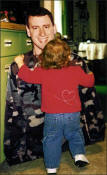
The printed image serving as a stand in for parents. Flat Daddy are being used to help children stay connected to a deployed parent. He is also filling the blank spaces in family occasion photos, event and trips. The units in Maine created them for all their families so the children can have a visual reinforcement of their deployed parent. Read more articles in Maine Today and New York Times.
The photo here is from a blog I'm Already Home.
Friday, December 22, 2006
Printmaking and the Radical Left in Mexico
Notes from a phone conversation between Caitlin Perkins and James Wechsler, PhD.
I had the opportunity to speak with James M. Wechsler, PhD. and Independent Art Historian and Curator. Dr. Wechsler will be giving a lecture at the Philadelphia Museum of Art called Propaganda Grafica: Printmaking and the Radical Left in Mexico on Sunday, January 7th (information below). The lecture coincides with the exhibition at the Philadelphia Museum of Art called Mexico and Modern Printmaking: A Revolution in the Graphic Arts, 1920 to 1950, curated by John Ittmann, Curator of Prints, the Philadelphia Museum of Art and Lyle Williams, Curator of Prints and Drawings, the Marion Koogler McNay Art Museum.
Dr. Wechsler contributed to the exhibition catalog and he explained that the essay that he was able to write is the first one in English that addresses the history of this important printmaking revival and the evolution of the organization, Taller de Grafica Popular founded in 1937 in Mexico City where artists like Siqueiros worked.
While most art history survey classes might cover the Mexican mural traditions, the prints in this exhibition are virtually unknown. The exhibition and the catalog pull from the major ideas of post revolutionary Mexico.
Like Philadelphia, Mexico City has a rich printmaking mythology. TGP or Taller de Grafica Popular, where thousands of editions have been published, was originally located (it has since moved) in a neighborhood of the directly ontop of the unexcavated ruins of the Templo Mayor complex and the first printing press in the Americas, a Spanish printing press built during the colonial times!
Dr. Wechsler will outline the printmaking revival sparked during the open air studios which inspired the well known mural traditions of Mexico. In post colonial Mexico, the government sponsored murals, controlled by Jose Vasconcelos, Minister of Education, focused on the themes of national unity and identity. While the artists are certainly well known for their murals, these official art themes didn't necessarily tell the whole picture, and the print mediums allowed the artists more freedom and could be distributed to a wider audience.
For example, Dr. Wechsler explained to me that after the revolution, many of the artists like Riviera, Orozco and Siqueiros worked on a newspaper called El Machete, which had articles, political writings and illustrations. The printed artwork was more radical than what was allowed in the murals-those in power were content with the partial revolution, and they did everything they could to prevent a full communist revolution.
Printmaking, Dr. Wechsler explained, was the vital movement of Mexican expression in the late 1930s, created in a social setting through team efforts. In fact, the artists in the TGP workshop would meet every Friday night for group critiques. Much of the work was ideologically and politically similar created between 1937 until around 1941. I found there to be many similarities in his descriptions to contemporary urban artists working in print mediums, like the fact many of the TGP artists created prints to be wheat pasted up around the city on newsprint, but would often print the same images on fine art papers for the collectors market.
There is often that interesting mix in the print tradition of the collectors market and those using print for political message, I was intrigued to find out that artists such as Orozco, Siqueros didn't start making prints until the director of the Wehye Gallery in New York asked them to create prints based on their murals, and were not necessarily a revolutionary tool.
Dr. Wechsler will trace the history of Mexican artists as they break the colonial traditions creating a new socialistic aesthetic, and the difficulties they encounter during governmental regime change, war and the disintegration of their endeavors during the Cold War.
As he pointed out to me, while the Mexican mural tradition is taught in art history classes, the printmaking workshops he will discuss are virtually unknown, and it is rare to see these prints. This is the most extensive exhibition in years, and the text is the most inclusive in years.
This conversation was by phone on December 22, 2006 with Caitlin Perkins and James Wechsler.
Lecture information:
Sunday, January 7th 1:30 pm at the Philadelphia Museum of Art
Propaganda Grafica: Printmaking and the Radical Left in Mexico
This lecture will be followed by a conversation with Dr. Guadalupe Rivera Marin, founder of the Diego Rivera Foundation and daughter of the famous Mexican muralist.
Tickets are required, and are free with museum admission, which is the Sunday museum entrance fee of "pay what you wish.". For more information, please call the ticket office 215-684-7469 (there will be a $3 handling fee to reserve in advance, but the tickets are going fast - so to guarantee your seats, get them in advance)
Lecture information
Exhibition Information
Catalog information
New York Times Review of exhibition
Wednesday, December 06, 2006
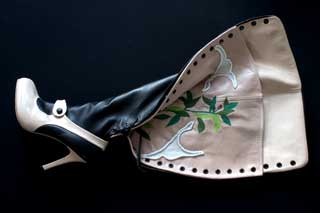
From the we make money not art blog here is an interesting article on temporary body imprints making into the fashion world by artist Emily Jane
Atkinson with her Tatoo-me boots
Print and fashion continue to walk hand in hand.
Art wall paper or A-WAL is "adorning the vernacular one email at a time". This web tool allows users to upload their own photos and images to be displayed as background wallpaper. The company is also featuring specially curated artworks to serve as image backgrounds for users. Adorning the artworld. Note - they do charge for this service - but an interesting idea as a means of creating virtual printed surface...
Saw this on an e-flux announcement this morning. The press release explained that for this installment, they are featuring independent writer, lecturer, and curator Dr Kathy Battista, who is based in London. Kathy’s abiding interest in and support for experimental art forms and innovative practice has been displayed through her past involvement and work with esteemed organizations such as Artangel, Tate Modern, and the Serpentine Gallery. Kathy has regularly contributed to Contemporary, Frieze, Third Text, and Art Monthly amongst other publications, is an editor of Art & Architecture Journal.
The artists featured in this exhibition include:
Daniel Jackson, Delaney Martin, Jamie Robinson, Sans Facon (Tristan Surtees & Charles Blanc), Dallas Seitz, Krisdy Schindler and Heather Sparks.
from Caitlin
Monday, November 27, 2006

Artist Rafael Trelles, since the summer of 2004, has been working on an experimental graphic art project on walls, sidewalks and lamp-posts throughout San Juan, Puerto Rico. Using a pressurized water hose and plastic stencils, he engraves elaborate designs on years of dirt and grime that cover the concrete.
José Roca brought a documentary about Trelles' project, En concreto (gráfica urbana) by filmmaker Roberto Tito Otero to show us on a recent trip.
www.rafaeltrelles.com
Ciudadlab: Documental y Charla: Rafael Trelles - En Concreto: gr?fica urbana
Monday, November 20, 2006

José Roca, the new artistic director for Philagrafika has been here this week and has introduced us to many new artists and projects which incorporate the printed image into their artistic practice and works.
One amazing use of the print is this online educational videogame - which uses imagery from linocuts animated with Flash animation.
Tropical America fuses the new world of video games to a compelling past through a journey to unravel the mysteries of the Americas. Developed in collaboration with Los Angeles artists, teachers, writers and high school students, the game features a bilingual, thematic gameplay, accompanied by an online database of educational resource materials, source texts and imagery.
The game website is located at www.tropicalamerica.com
Another artist that José presented this weekend was Betsabeé Romero who carves and etches car tires with images which she then rolls through sand, sugar or onto cloth. Sometimes the tires are put back onto cars and driven through paint leaving a printed trail as the car drives.

We will continue to upload artists and images from José's presentations with future posts.
Monday, November 06, 2006

The ultimate in portable art...Drive By Press. Part of the Prints Gawn Wild event in Brooklyn this past weekend, hosted by Cannonball Press, Joe Velasquez and Gregory Nanney drove in their portable press. Bringing art to the masses these two guys travel the country spreading the ink one stop at a time. Drive-By Press is a completely mobile printmaking studio built to promote the growth and democratization of art through printmaking.
Thursday, November 02, 2006

Angel Chang A pleated tunic in a silkscreen print that changes color according to body heat. From the New York Times Fashion Week Wrapup 9/20/2006.
So where does this ink come from? More investigation needed...
See more images from Angel Chang's show on flikr
Article on Angel's clothes on Craftzine blog
 A Print Tour of New England, Part 1
Caitlin from Philagrafika here. I just spent a week touring New England and some amazing prints shows. First stop was at the Rhode Island School of Design Museum to see Wunderground: Providence 1995 to present. The curators, artists and collectors pulled out all the stops putting together both a poster show and an truly amazing interactive fun installation.
The poster show cover the walls of two galleries is a cluster of wonderful confusion and eye candy while giving me as an outsider a visual history of the recent history of this community. The vast quantity of line and color, political messages, local activism mixed with entertainment made me feel warm inside. You could feel the energy of this place, Providence radiating through these walls covered floor to ceiling with printed images. The artists who created these prints and posters have a style which you can see ebb and flow as the community of artists obviously enjoyed and learned and styles grew and stemmed like an amazing family tree of artists spread their vision.
The posters are not about fine editioning and the artists aren't concerned with signing or clean borders - some of my favorite looked like they were thrown together in an afternoon - but this form of art is about the message - an immediate thought communicating it to a community.
The next room was the delicious treat, Shangri-La-La-Land. This was the installation by many of the artists of the now defunct Fort Thunder. The show were curated by Judith Tannenbaum, Richard Brown Baker and Maya Allison. The artists include Mat Brinkman, Brian Chippendale, Jim Drain, Leif Goldberg, Jungil Hong, Xander Marro, Erin Rosenthal, Pippi Zornoza and Lu Heintz. I was lucky enough to meet some of these artists when they were in Philly for the Full Force Five show at Space 1026 - when Jungil Hong made an amazing psychedelic bb shooting range - and she made me weep inside at the beauty of what she did at the RISD show.
Entering the installation, visitors are greeted with "Welcome please enter and see the beginning of the end of everything, Shangri-La-La-Land. The artists each worked to create a utopian room full of animation, sound, interactivity and visual treats creating a cacophony of glee with myself, and my family (aunts, uncles and ma). Everyone played and shared as we discovered secret little art within the installation - like Xander Marro's temple which dominates the space - with puppet shows and animation housed within. Jungil Hong created a giant glowing jellyfish like sphere covered with screenprinted shopping bags creating a shimmery skin. For those bold enough to enter and be engulfed by the egg, you are treated to a terrarium garden of succulent plants.
Many of the artists are also involved with animation - and their were little treats like the animation of bats which mesmerized me.
Overall the installation is a visual treat! Full of wonderful ideas - and it is wonderful to see how the artists have evolved their styles and skills from the poster printed art and grew it into polished installation - which still gives a lovely sense of community.
------
You can see some of the animations, music and art of the artists here at the Fort Thunder
Monday, September 11, 2006
Please see the posting about Megawords project in ArtForum.com (diary article by William Pym.)
Friday, September 08, 2006
 It all starts with the printed image.
Panelist and artist Zoe Strauss summed it up when she said that all the artists on the panel (ESPO, Tony Smirsky, Dan Murphy and Zoe herself) start with the printed image and move in different directions.
One manifestation shown here from the luminescent Megawords installation at the Powel House is a video projection of a spinning car wheel - creating an imprint on the dining room wall, playing off of the 18th century ornamentation and  portraiture. All images here are from the 2006 installation at the Powel House Museum.
Thursday, September 07, 2006

Walter Benjamin, in his 1936 seminal essay, The Work of Art in the Age of Mechanical Reproduction, identified the aura as that which withers in the age of mechanical reproduction; the aura is the uniqueness of an individual work of art. This idea of a withering aura has a new challenge posed during a Philagrafika panel discussion on September 6th, about Megawords Magazine.
The artists who create Megawords magazine, use the commercial process of offset lithography, to create an art object. Yet, in this digital age, somehow a mechanically printed magazine has become an object of nostalgia, with a very strong aura created through the imagery, content and means of distribution.
Megawords is also telling a story of place. Steve Powers, one of the panelists, identified this image from Megawords, of Herr's potato chip bags as being a powerful image and part of the story that the artists are telling about Philadelphia-showing their version of Philadelphia.
The men behind Megawords magazine have created an issue that will be used as part of an installation at the Powel House Museum in Philadelphia. The artists are using the commercial process of offset lithography to make a small run art object that they are incorporating into a more extensive installation in an 18th century house museum located within a contemporary urban environment.
When asked to respond to their process and product I'm inclined to focus on the issue of control. Tony and Dan work in a way that ostensibly allows them to have complete control over the production of Megawords: they argue against corporate sponsorship or including advertisements in the magazine because they don't want their choice of content to be influenced by a demanding funder; they talk about the do-it-yourself nature of their work. In an attempt to tie this to the larger issue at hand -- exploring the nature of the printed image -- I want to ask, what is it about the publication process that allows us to think of Tony and Dan as having full control when the physical production of the magazine happens at a press halfway across the country?

 Posts

