Monday, July 07, 2008

More Than Meets The Eye


Continuing on my fascination with robot printers - I came across this amazing DIY tinkerer, Pindar, who built a robot that paints in the fashion of an old school dot matrix printer. While the artist questions whether it is a print or a painting - the working states show of the work imply multiple to me. Whether or not the artist is aware of it - he is proofing. But, rather than inking a plate differently - he is adjusting the algorithms which program and run the robot he's named Zanelle.

At first the imagery the artist chose is so campy - but the more I've looked at it and the process in order to achieve it, the sweet irony of the image along with some heavy implied metaphorical content- robot printing/painting a commemorative image of the ultimate robot warrior - Optimus Prime.

Zanelle, the robot has quite a personality and even she questions her artistic practice, since she responds to posters on the blog/website that the artist maintains - see link below

Art and Robots: http://zanelle.wordpress.com/

Wednesday, July 02, 2008

Snap, Click and Yodel

"Photography has meaning only if it exhausts all possible images."

The March/April issue of Art on Paper contained a wonderful treasure, a fictional story called The Adventure of a Photographer by Italo Calvino.* The editors chose to reprint this fictional story on its 50th anniversary. It is a cleverly insightful text on photography within a fictional story.

The main character, a skeptic Antonino Paraggi--attempts to capture and create the perfect photograph. He questions the pursuit of the perfect photograph by his friends and family, that snapshot capturing the perfect moments, rather than the often sticky, dirty unflattering moments of daily life.

Calvino reflects that "Photographed reality immediately takes on a nostalgic character, of joy fled on the wings of time, a commemorative quality, even if the picture was taken the day before yesterday. And the life that you live in order to photograph it is already, at the outset, a commemoration of itself."

Last week, I was amused to read an article by Michelle Slatalla in the New York Times, Lights, Camera, Inaction - which shows that human nature's need to capture images hasn't changed, while the technology with which to do so has. The new Flip video camera - allows seamlessly simple video capture, which truly is just about idiot proof. Take out of box, push record button, plug into computer - voila, you're you-tubing down the video stream.

I find myself wondering, while family videos of Slatalla's article seem to have the same nostalgic quality as Calvino's snapshots, does the new and constant stream of public voyeurism wash it away? The DIY look from the quality to the abrupt editing of this endless supply of video doesn't feel nostalgic to me. I love to feed my gluttonous appetite--spending hours clicking from images of hula-hooping to yodeling french bulldog puppies to screen print demonstrations. (This also contributes to my ever-increasing attention deficit disorder.)

Taken one step further, my studiomates at Space 1026 have started communicating in emails with YouTube links - video streams are becoming a vernacular. It can feel quite peculiar, but also brilliant if you have patience. Whole jokes are told through an email message thread simply through video links. I wonder, could we develop a new way language for communicating based on a constant metaphorical form video stream?

Phew, forgive me for the digression into a metaphysical utopia of technology. I need to look at more puppies.

Goodbye for now,
Caitlin

*I encourage you to support Art on Paper magazine, but the story is also readily available on the internet through google searches.

PS: I'm starting to feel like this puppy... http://www.youtube.com/watch?v=Fw0Yu76rb-4

Tuesday, April 15, 2008

We're not curing cancer...but...

I am really excited by new advances that science offers as possibilities. Here are the things I'm excited about today in the world of print...

Oldies but goodies are new ideas again...Polaroid announced their new digital photo printer - which will be the equivalent to the polaroids of yesterday. It will print using a new thermal technology - no ink cartridges or chips...the image is developed using print heads that interpret the image into heat -which in turn heats special paper ...wow. click here for instant mobile printer which can be used with cell phones and digital printers. Though, sounds like there are concerns about finding a niche - since we are all getting used to looking at pictures in the virtual screen, web world.

Next, printable skin...inkjet printers are being hacked to be able to print human tissue cells to grow new organs. The first bladder created in a lab using this technology was actually transplanted here in Philadelphia at Thomas Jefferson hospital! Heart cells in ink jet printers - these are exciting times. I saw this story on CBS Sunday Morning and it was mind blowing... The Future Is Here: Regenerative Powder, Ink Jet Heart Cells And Custom-Made Body Parts

While at Southern Graphics Council Conference - we met up with Steve Hoskins who is in Bristol, England at the Centre for Fine Print Research. "We recognise however, that print is inexorably linked to industrial development so therefore we are also equally comfortable with conducting research from an industrial perspective." Another location here in the US is Eyebeam gallery in New York is also supporting art and technology endeavors.

And, just to show that I love the history of print as much as the future of the media, here is a trailer for the movie, Goya's Ghosts which I just watched recently. The opening to the movie features Goya's prints and there is a wonderful scene where printers are etching Goya's copper plates and printing them. The Holy Inquisition is unhappy with the "filth" that Goya's prints depict, and uber weasily bad guy, played by Javier Bardem is explaining to them, it is not the artist who should be blamed, but the people the artist is portraying...which ultimately leads down a dreadful path. I enjoyed the cinematic power to allow those powerful prints to occupy a space other than a print study room. Here is the movie trailer which features some prints and even a copper plate!

Wednesday, April 09, 2008

Southern Graphics Conference 2007

Philly was represented proudly at the 2007 Southern Graphics Council Conference graciously hosted by Virginia Commonwealth University at the end of March. Philagrafika 2010 Curatorial Team members José Roca and Shelley Langdale presented in panel discussions, as well as Daniel Heyman who presented a fabulous panel about art in a time of war. It was exciting to see Shelley and José introduce some of the ideas for 2010 as content.

Shelley Bancroft and Peter Nesbitt of Art on Paper and Triple Candie gallery were the conference keynote speakers and delivered a wonderful summary of what trends develop around prints and in works on paper - including the trend for print shops to either create huge editions or very small but large scale editions to cater to the current markets. (image of Shelley and Peter's presentation above)

Daniel Heyman presented with Sandow Birk and Paul Mullowney on The Printmaker in Wartime: The Influence of Callot and Goya on 21st Century Art. This panel focused on Heyman's current project of documentation of interviews with detainees from Abu Ghraib prison and Birk's series Depravities of War
created with Paul at Hui Press in Hawaii. (photo: Daniel, Paul, Cindi Ettinger and Sandow Birk)

Shelley Langdale of the Philadelphia Museum of Art presented on the conference thematic panel, Command Print. Each presenter took a different tack, tying themes they saw develop during presentations throughout the week. Fellow Command Print panelists included artist and critic Johanna Drucker; artist and educator Steve Murakishi; and artist and critic Mark Harris. Each panelist looked at the state of the field of print from a different angle - Johanna from a theoretical; Mark from a science fictional future looking back; Steve from a pop culture angle and Shelley from a curatorial perspective.

The Bits and Atoms panel organized by Deb Cornell featured José Roca - who took a different tack on the digital by talking about the opportunities the internet offers artists for dissemination of ideas - exemplified through artists projects such as Superflex. He also spoke of the latent print - the possibility for print that the digital practice offers.

Philadelphia will be hosting the 2010 Southern Graphics Council Conference. If you would like to find out more about this exciting opportunity, feel free to email me cperkins at philagrafika.org.

And, it wasn't all theory and talk, as you can see by the images below - there were plenty of dirty hardworking printmakers showing their stuff all over Richmond. Including this fantastic new woodcut by Dennis McNett of a Snow Leopard attack - and these amazing printed bedsheets by the Hancock Brothers.


Wednesday, March 12, 2008

Collotype and Photogravure - Traditional Process in the Digital Age


Opening March 13th at the Project Basho Gallery at 1305 Germantown Ave. in Philly is “Time: Exhibition of Contemporary Collotype Prints.” The title of this exhibition references both the lengthy process involved in the production of a single print and the anachronism of the use of this technique in today’s totally automated times.

Also working today are artists using the photogravure technique, a process similar to collotype. A recent exhibition curated by photogravure artist, Peter Miller, can be viewed at Luminous-Lint. Contemporary artists using this technique include John Goodman, Lothar Osterburg and Glen Rubsamen.

The photogravure process emerged in 1829 and the collotype was developed in 1839 during the developmental stages of photography. At the time, these processes appealed to both photographers and printmakers because of their aesthetic qualities, available tonal range and resistance to fading.

Today, artists have a unique opportunity to explore the combination of traditional methods and emerging digital technologies in the production of artwork. This phenomenon particularly affects printmakers as the advent of digital printers creates new, less process-oriented methods of printmaking and increases the general public’s ability to produce printed images.
“Time” is a particularly interesting project because it deals with these contemporary printmaking issues through the use of a process that was developed initially as a method of reproducing photographs. It features artists Emmet Gowin, Eikoh Hosoe, Graciela Iturbide, Koichiro Kurita, John Pfahl, Ryuji Taira, George Tice and Auther Tress.
To learn more about the exhibition and the history and process of making collotype and photogravure prints, follow these links:


Time: Exhibition of Contemporary Collotype Prints at Project Basho

Collotype Historical Information from the Library at the University of California, Santa Cruz

Collotype Database at the Bristol School of Art Media & Design
- To enter database, click the given link. Username: collotype, Password: collotype.
- Contained are articles explaining in detail various collotype processes.

Art of the Photogravure Blog – A Comprehensive Resource Dedicated to the Photogravure


Images: Top – Glen Rubsamen, Chaos a few feet away, 2007 Photogravure
Bottom – Artist working on a collotype from Project Basho’s “Time”

Written by Dana M. Osburn - Philagrafika Blog Intern

Friday, February 08, 2008

Print and Web2.0 - its Elemental!

I am really intrigued by the possibilities of the wealth of online tools that printmakers are just beginning to explore. Printmakers by nature and medium are a tribe - and the web2.0 tools like blogs, websites and photoblogs offer these artists a way to connect. They are often clumsy - very rarely elegant, but I like the fits and starts of this new technology--making it feel so much more human.

This morning while drinking my coffee, I came across this print project this morning - The 2007 Periodic Table of Elements Printmaking Project. The website is great - offering a simple to navigate selection of thumbnails arranged in the form of, what else? - the periodic table. The producer, AzureGrackle also created posts on Etsy and another link to the related flickr site creating a multilevel project - with several entry points.

This project involved 96 printmakers from 8 countries - and it was started only last March - this kind of process is only feasible because of the internet (or innerweb as I really like to call it.)

Thursday, January 24, 2008

More DIY high tech printers

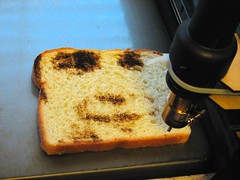
Adding to my collection of website stories about people's great DIY printers - here is a link to one prints images on toast.

In addition to their sublimely ridiculous toast printer, the Evil Mad Scientist Laboratory website also has a posting about a sugar printer which they built for about $500 which prints 3D objects. The printer's creators were inspired by a show of Rachel Whiteread at the Tate Modern - and enormous installation of white cast boxes, which resemble sugar cubes. The Tate's website has a great video of the installation being created in time lapse video. Whiteread has often come up in curatorial discussions at Philagrafika as an artist who works with multiples and works from a variety of matrices, for example her watertower project.

Here is the toast being printed:

Friday, January 18, 2008

Cardboard Carpets


One of my favorite materials to screenprint on is cardboard. (As part of an installation at the ICA last year, Space 1026 printed over 3,000 shingles of recycled cardboard!) So, I was immediately drawn to this design idea of printing cardboard with designs to create cardboard carpets by Wendy Plomp on the Free People blog today. An entirely new idea for urban installations - creating beautiful patterns, laying them out in the street and creating your own living room outside!

And, when you are finished laying out your carpet you could furnish your outdoor street installation with cardboard furniture by Cardboard Robot.

Here are some more links to blogs about the cardboard carpets

Wendy Plomp design site and another blog with article after seeing her in Domus magazine
http://www.wnd.nu/works/show/64/message-in-a-box.html

http://bloesem.blogs.com/bloesem/2008/01/message-in-a-bo.html

Monday, January 07, 2008

A Small Call for Entry


Small print shows happen all over the world - part of the nature of print, but I just came across an interesting call for entries for a print show at possibly the smallest gallery I've ever heard of.

As part of the 2008 Southern Graphics Council Conference at Virginia Commonwealth University the Locker 50B is seeking print entries. In March Locker 50B celebrates it's sixth year with "Inkling", a print exhibition, will be installed for that month in conjunction with the Southern Graphics Conference. Please note, no entries can be more than 4" in diameter.

Locker 50B homepage

Article in the Washington Post

Call for Entry


Southern Graphics Council Conference

By the way, Peter Nesbitt and Shelly Bancroft from Art on Paper will be the conference keynote speakers. The conference runs March 26-29, 2008 in Richmond, Virginia.

Friday, January 04, 2008

Reproduction Controversy in the News

Two exhibitions are sparking controversy and raising questions about the power of the print about Jacob Lawrence and his seminal work, The Migration of the Negro which completed in the 1940s. Triple Candie and the Whitney both have exhibitions up - the Triple Candie show is raising controversy in that they are showing the entire series as reproductions while the Whitney is showing only 17 of the 60 images. Lawrence conceived of the series as one work. The debate is interesting in that the reproductions shown in their entirety are more powerful than the singular images removed from their original context. Somehow, the ghost of Walter Benjamin's aura argument continues to circle.

Related Links
Triple Candie exhibition:
Undoing the Ongoing Bastardization of the Migration of the Negro by Jacob Lawrence

"Visions of a People in Motion" by Holland Cotter, New York Times, December 28, 2007

Whitney Museum exhibition

And The Trains Kept Coming Jacob Lawrence's The Migration Series on Tour funded by NEA

Jacob Lawrence at the Phillips Collection in DC

other blogs on exhibition
greg.org

Thursday, January 03, 2008

Printed Image in the West, an Online History

I came across a lovely resource this morning in my search for material relating to the teaching of the history of Graphic Arts. For a little background, I am particularly interested in the lack of this curriculum in the US - and realize that I was lucky at the University of New Mexico to have taken O.J. Rothrock's, History of Graphic Art. I am collecting syllabi from classes that I do find, and if you come across any - please send them to me at cperkins@philagrafika.org

The Printed Image in the West: History and Techniques

put together by Wendy Thompson from the Metropolitan Museum of Art's
Department of Drawings and Prints, includes wonderful illustrations and has information on woodcut, engraving, etching, drypoint, mezzotint, aquatint and lithography.


Two Views of the Head, 1746; Jacques-Fabien Gautier-Dagoty (French, 1716–1785) Plate 4 of Myologie complète en coleur et grandeur naturelle; Multiple-plate color mezzotint; Plate: 16 3/8 x 12 3/4 in. (41.6 x 32.4 cm)

Saturday, December 29, 2007

Print-Bot


Yes, here it is, the best DIY hack/mashup i've seen this morning. The iRobot mashed up with a dot matrix printer. This little thing is no master printer and the images are very rudimentary...but think of the possibilities! This one is printing with talcum powder on a carpet.


From the instructables website located at www.instructables.com


Thursday, December 27, 2007

Carvin' Block

Visit ArtintheAge.com for more info


Space 1026 member, Bill McRight is a hardworking printmaker - he's at it daily, I like to think of him as part of the blue collar artists, whose practice means constantly working without pretension--just because he can. His fellow studio mate Ben Woodward, filmed him carving a block in their studio over the course of a day and posted it on the Art in the Age website. I like his unique carving style - he lays out a patch of black and slowly builds up freeform patterns to create his fantastic lurking creatures, criminals on the lam or whatever.

Sunday, December 23, 2007

Shades of Forgiveness in Multiple


THE THING is a quarterly editioned object offered by two editors, Jonn Herschend and Will Rogan. Each year, four artists, writers, musicians or filmmakers are invited by the editors to create an everyday object that somehow incorporates text.

The first edition was created by Film maker and writer, Miranda July who created a silkscreened window shade with the text: "If this shade is down I'm begging your forgiveness on bended knee with tears streaming down my face."

An object such as this could easily be trite, but the theatricality of the language plays off the whimsy of the action of pulling the shade, with a balance of humour that I find intriguing. Or perhaps it is the irony of the bathroom setting?

See more about this editioned multiples at www.thethingquarterly.com.

I've recently been thinking about how artists other than visual artists might approach printmaking - and this is a great example of a project that expands out the medium of print.

I'm looking forward to seeing more by this group.

Caitlin

Wednesday, December 19, 2007

The Senate has a graphic art collection, who knew?

Shown here is a very large (for a mezzotint) - over 26 by 36 inches!

United States Senate Chamber by Thomas Doney, 1847

Senate Graphic Art Collection


Letterpress is everywhere these days - and even the cover article on the December/January issue of ReadyMade Magazine. This issue has a step by step instructions for constructing your very own letterpress using simple lumber and a bottle jack. You can find the instructions here Press Kit there are also instructions for making simple polymer plates.


And, if building your own letterpress just seems a little too daunting - and you'd rather sit around and eat bon bons - check out these typographic chocolates which I found out about the blog courtesy of Art in the Age blog.

Monday, December 17, 2007

Creature Comforts USA - Art

Philagrafika friend and supporter Shelley Langdale sent me this animation - and yes, there is a printmaking reference. If you need a little cheering up - and a reminder why we do what we do...here you go.

Friday, December 14, 2007

I was just recently reminded how cool this interactive demonstration of how to make a print done in 2001 as an educational and very cool tool to go along with the exhibition of the same name.

MoMA's What is a Print interactive demonstration - check it out!

Speaking of cool tools, check out this youtube video of laser engraving a macbook, inspired by a MAKE magazine article.


Finally, for affordable prints you can put the gypsy sale at Space 1026 on your calendar for the weekend on Sunday, December16 from 12 to 7 pm.

Wednesday, December 12, 2007

Printmaking, often used as a political medium, is causing havoc in the New York Public Library's walls. Check out the New York Times article here:

Published: December 4, 2007
Controversy has erupted from the sleepy third-floor hallway galleries at the New York Public Library, where a modest exhibition of contemporary prints called “Multiple Interpretations” is on view.

This exhibition organized by the library’s curator of prints, Roberta Waddell, has raised concerns and has appeared in Fox News along with other press. Among the artworks are prints by Philagrafika member and board of director Daniel Heyman from his Amman Series.

Fox News Story

Monday, December 10, 2007

Art in the Age of Appropriation

This recent article in the New York Times focuses on the art of Richard Prince and his appropriation of work from the Marlboro ads shot by Jim Krantz. And in light of the discussion, I will copy the image, adding yet one more layer to the copying conversation - and another facet to our debate and the necessity to constantly educate the public about the difference between the reproduction and the fine art print.

Published: December 6, 2007
What do the photographers who took the original pictures think of these pictures of their pictures, apotheosized into art but without their names anywhere in sight?

A Copy is Art slide show in New York Times

Friday, December 07, 2007

I was researching artists yesterday and came across the work of Gert and Uwe Tobias. They are twins from Romania who live in Germany and just happen to have work that opened at the Moma this last month which runs through February 25, 2008.

They do large scale woodcuts with immediate whimsy and an undertone of darkness that is very mysterious. Check out the Moma website and it features images and installation video.

Moma Exhibition Projects 86: Gert and Uwe Tobias

Hammer Museum in Los Angeles exhibition in 2007

Team Gallery featuring an exhibition from March 2007

The Team Gallery website includes these images: The Devil is Not Mocked and The Funeral which shows that dark folk tale feel fostered in their native Transylvania, but updated by their use of typology and graphic design.


Makes me want to go cut some block!

Best,
Caitlin


Monday, November 12, 2007

José Roca and I visited the Santos de Puerto Rico: Carvings of Faith and Sentiment curated by Anabelle Rodríguez. The exhibition just opened at the Lorenzo Homar Gallery located in Taller Puertorriqueño and it includes more than one hundred santos carved from wood. It is a delightful example of the carvings by these masterful craftsman side by side by the wonderful prints showing the intertwined traditions.


For example, to the left is a serigraph
depicting master carver José Orta.

Next to this print is a case (below) containing a delightful a self portrait in wood This thoughtfully arranged mix creates a wonderful vignette which repeats throughout the exhibition--a mix of fine art, cultural anthropology and craft.


Taller Puertorriqueño is located at 2721 North 5th Street (corner of 5th and Lehigh) The gallery hours are Tues-Sat 10am-6pm; 215-426-3311 for more information.

Wednesday, September 26, 2007


So, I wanted to invite anyone who might be interested to come to my little side project at Space 1026 next week. It is an exhibition about collaborative printmaking.

Space 1026 is located at 1026 Arch Street featuring several different makes and models of print collaboration with projects by local and national artists.

Cannonball Press and Howling Print Studios are brewing up a highly caffeinated, giant relief print mash up, served strong and black, of course. Cannonball Press is the gnarly, but lovable print dudes from Brooklyn, New York--Martin Mazorra and Mike Houston, who crank out more prints than you can shake a stick at. Their co-hort, and partner in crime, Dennis McNett of Howling Print Studios, also of Brooklyn infamy.

And in the opposite corner, facing off against the stark black world of Cannonball and Howling Print will be the tie dye musings of hippie love, featuring an evolving oversize screenprint featuring image casualties from the summer of love, what printer, O. Roman Hasiuk has been describing as "a dynamic collaborative print. It's an organic, process oriented, ongoing large-scale screenprint that features the imagery of many different artists, with no set beginning or determined end." Lucky gallery visitors will be treated to impromptu ink slinging sessions in October by Hasiuk using screenprint printing and his forearms of steel.

Next, a Broadside Battle will be raging on the big wall in the gallery! This "battle" is an open competition for printmakers and artists, featuring single sheet printed matter. The battle promoters are expecting a slew of gig posters, public notices, wanted posters and more. That's when the competition begins...a "printoff," sort of like the NFL playoffs, but no pads or mouth-guards required. Each week the best printed matter (determined by a rag-tag team of judges) will advance until a winner is declared. That lucky winner will receive all of the prints as their prize!

And, Drive By Press will be cranking out the prints, in the gutter outside Space 1026 on Friday night, and Saturday, too. Drive By Press is a traveling print shop housed in the back of a pickup truck based in Wisconsin. Drive By printers Gregory Nanney and Joseph Velazquez will be stopping in Philadelphia on their east coast tour. They bring printing to the streets with their very own brand of print pulling action!

Hope you can make it out!

Thursday, September 13, 2007

After many months of planning, I am so pleased that the exhibition is up and beautiful at the Temple Gallery. Re:Print Re:Present Re:View opened during First Friday last week to a steady and engaged crowd. I noticed that people returned to watch Berni Searle's video installation, Spirit of '76, over and over. It is a haunting piece and not to be missed.

We are in the middle of production of the publication to accompany the exhibition and are hoping to have that ready for people to enjoy at the panel discussion! Tony Smyrski is doing a great job as the graphic designer for the project. He designed the project logo seen to the right.


The wallpaper installation at the Paul Robeson House is underway for Maria Magdalena Campos-Pons' project. The house is currently under renovation as part of a multi-phase capital campaign. We are so pleased to be able to raise awareness of the house and its history.

Shown here is the costume made for Paul Robeson in a case to the left of the staircase in the row house. The images in the wallpaper are images of the youth from the neighborhood and a silhouette of Robeson playing football, which creates a celebratory pose. The bright yellow wallpaper energizes the space. Later, this wall treatment will be embellished with window textiles and will be accompanied by a video projection to be installed in October.

Posted by Caitlin, project manager

Friday, August 17, 2007

Re:Print Re:Present Re:View is in installation mode. Berni Searle, one of the artists in the project is back in South Africa (she was working in NYC). We have been coordinating many of the project components long distance. We just received the still images from the video she created for the exhibition at Temple Gallery this morning. (shown here)

Berni purchased a special flat tub here in the States, in order to create this video. In the past, she filmed the water pieces above a bathtub, which has sloping sides. This new flat tub allows her to capture the swirling images in a different way.

We are also very excited because Maria Magdalena Campos-Pons' wallpaper, which she designed arrived yesterday. It will transform the first floor of the Paul Robeson House in West Philadelphia. We also learned that we can move ahead with the performance in the space which will take place on October 13 following the panel discussion at the Church of the Advocate. The performance will be by Neil Leonard her long time collaborator and husband. The jazz composition will be performed along with interpretations of songs sung by Paul Robeson. The musicians will play it twice to accommodate as many people as possible.

The banner production for Rachid Koraïchi is underway as well. The 21 banners will be printed and installed both inside and outside the Church of the Advocate in North Philadelphia. The banners are based on drawings he did in Paris and mailed to us. We held a community meeting at the Church about the exterior banners to make sure that we have support from the community to install them - and we do. They are going to be gorgeous.

That's it for now...I will report back soon as the installations begin going up.
-Caitlin Perkins

Thursday, August 02, 2007

Re:Print, Re:Present, Re:View is in full production. It is an exciting time here at Philagrafika. We have been working with curator Salah Hassan, and Temple Gallery Director Sheryl Conkelton for a year on this project. The artists are Rachid Koraichi, Berni Searle and Maria Magdalena Campos Pons. They were asked to create work for a project here in Philadelphia using the printed image and Philadelphia as inspiration. Over the last 6 months we have been working really hard with the artists to realize their projects and the final installation at Temple Gallery will be really rewarding.

The staff is definitely learning from this project. Although the logistics are a daily challenge, overall the experience has been positive. In fact, one of the biggest challenges is to create large installations at three sites, when the artists all live outside Philadelphia, and two out of three outside the country. Berni is in South Africa, Rachid is currently in Tunisia and Magdalena is in Boston.

Rachid has been working with us from overseas - he is an Algerian artist living in Paris. Many of our production meetings have been early morning conference calls to Tunisia; Rachid is currently working on creating an artist residency program in an ancient castle. Our gracious translator Vincent Renou helping us decipher Rachid's production needs for a outdoor/indoor banner project.

Some of the highlights focusing on print are:
Magdalena's use of print to transform an aging interior. to brighten the first floor of the Paul Robeson House, a historical landmark and through what she called an artist "gentrification." Through her wallpaper she hopes to bring interest to a site--using her project to focus attention to this important landmark of African American in Philadelphia.

Rachid's banner project (shown in this post) includes one for William Penn, featuring a stylized map of Philadelphia. This is Philagrafika's first foray into installed city public art. And, as curator Salah Hassan explains about Rachid's project Homage to Love and Memories, "His compositions and production drawings for the banners are rooted in Sufi significations, and their ordering of numbers and their symbolisms suggest the transcendent link between human beings and the divine order. Accordingly, Koraichi's use of the number Seven and its multiples serves as the primary symbol for this banner project."

A detail from the production drawing featuring a stylized map of Philadelphia by artist Rachid Koraichi. City Hall at the center surrounded by the parks appearing as leafy branches, and Eastern State Penitentiary shown in upper left represented as a asterisk shape within the square. The watery designs of our two rivers flank on the right and left.

Papermakers will be excited about Berni's exploration of documentation of a act incorporating hand papermaking - her body is draped with freshly cast paper. A black crepe paper rosette is then placed on the white sheet. Photographs documenting the process as the crepe paper slowly bleeds its color into the wet pulp.

And finally, I am really excited about the simple artist publications - ephemeral artist pamphlets that can be collected over time and supplemented with downloadable PDF components from our website - encouraging audience to collect over the course of the exhibition. A package will be available that can hold all the publication components.

I promise to post more frequently the progress on this project and the upcoming gallery installation and site specific projects develop.

Posted by Caitlin Perkins on August 2, 2007

Wednesday, April 25, 2007


The 2007 Philadelphia Invitational Portfolio production is underway. One of the selected artists, Anthony Campuzano stopped by our offices today after visiting the Brandywine Workshop where he will be creating an offset print this summer. Each year print shops like the Brandywine graciously offer their time and the expertise of their master printers to work with a regional artist to produce a portfolio of prints for this project.

Here is Anthony posed above the print shop at Brandywine Workshop, holding a fresh copy of the New American Paintings MidAtlantic Edition #69 curated by Steven Bennett Phillips-which features his paintings (and the back cover image!).

We will be following the production of his portfolio print this summer at the printshop (our Philagrafika offices are right upstairs).

We all chuckled when, as he said, he has finally reached success in his parents' eyes because they can now go to Barnes and Noble and see their son's artwork in print.

My fingers are still inky from being part of a steamroller printing event at the Brooklyn campus of Pratt School of Art for Big Damn Prints conceived by artist and faculty, Dennis McNett (also of Howling Print Studio).

The third year for the event was a huge inky wonderful mess as students from Pratt, Parsons (with their faculty Martin Mazorra of Cannonball Press) and a few of us from Philly including fellow printmaker Bill McRight and I joined in the fun printing our large scale blocks. Bill was smart and carved his block in Brooklyn, while I made mine at Space 1026 and carried it in pieces on the chinatown bus...

This event was a great example of the energy and spontaneous fun that is printmaking. You don't see painters running around with heavy equipment and covered in ink...nope this is all about the printed image and the community that gathers around the printshops...


Check out Dennis McNett's photos from the event on photobucket


The energy and work generated by the Common Press, shows the possibilities when fine print and literature meet. This nascent letter press studio, a collaboration between Kelly Writers House, Penn Libraries, and the Fine Arts program in the School of Design at the University of Pennsylvania just opened their first exhibition.

The opening reception for Mixed Media, Mixed Company Conjunctions at the Common Press on exhibit April 23rd-August 17th juxtaposes examples of letterpress work by artists and students at Common Press with fine press editions from the rare book collection.

Shown here are some of the folks involved with the Common Press (from the left) Chris van Auken, Lynne Farrington of the Rare Book and Manuscript department of Van Pelt Library at UPENN, David Comberg from the School of Design, Matt Neff, Lecturer in Printmaking and Print Shop Manager, and Andrea Gottschaulk, Exhibits and Programs at Annenberg Rare Book & Manuscript Library.

Friday, March 16, 2007

The Digital Debate
Post by Cindi Ettinger of C.R. Ettinger Studios

As I peruse the Art Fairs, and art magazines, I see more and more "digital"
art available through art organizations. Often they are nothing more than
scanned images or reproductions. They're misrepresented and called original
prints and are often used for fundraisers as well as being sold as fine art
prints. They are signed and numbered.

There are many digital prints out there that are created in the computer
with great skill by the artist. Yet, there is no differentiation between
those "works of art" and a copy such as a scanned drawing or painting. It is
high time for a discussion to eliminate this confusion. People need to be
aware that there is a difference and they should know what it is that
they're buying. It is particularly confusing when these "copies" are
available through museums and advertised in art magazines such as Art On
Paper as "original prints." Historically, with every advent of new
technology, which usually involves a photo process, these issues have to be
readdressed. So now with the digital age in full swing it's time to clear up
this confusion.

- - - - -

Interested in the digital debate?

Read Martha Schwendener's article "Even in the Digital Age, a Strong Case for Printmaking" from February 12, 2007.

7/7/08 Update, just found another printmaker positing similar questions on the blog post: Are We Witnessing the End of Fine Art Printmaking?

Monday, February 19, 2007

Generous-T was a public t-shirt printing event at the Institute of Contemporary Art as part of the Locally Localized Gravity exhibition. This public participatory event by the artists of Space 1026 featured screenprinting, the same print technique they used to create the shingle covered installation at the ICA.


This event attracted over 200 people visiting the museum installation, participated in the event Printing with the artists. The results were hung on ropes within the installation incorporating the new prints into the installation, and engaging the gallery space for the event.


The field of print faces challenges from being banned from Art Fairs, to academic print departments abandoning traditional shops for digital printers. The New York Times recent article, Even in the Digital Age, a Strong Case for Printmaking by Martha Schwendener talks about these issues and discusses the exhibition Artistic Collaborations: 50 Years of Universal Limited Art Editions is at the Museum of Modern Art, through May 21.

Schwendener touches on several hot topics for the field of print including the move by many academic institutions to move away from traditional print techniques to digital technologies and the collaborative nature of the print shop. “Artistic Collaborations” marks the half-century milestone for the workshop but Schwendener questions the lack of emerging artists shown in the exhibition.

"Contemporary Art on Paper" at the Philadelphia Museum of Art, curated by Innis Howe Shoemaker, features Philagrafika prints by Shelley Spector, Charles Burwell, Kate Abercrombie, Candy Depew and Issac Lin.

The prints are all on view in "Contemporary Art on Paper" February 9 through April 22, 2007 in the PMA's Berman & Stieglitz galleries.

Charles Burwell's Variations shown to left.

To see more of Philagrafika's Annual Portfolio Prints, click here

Monday, January 22, 2007


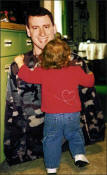
The printed image serving as a stand in for parents. Flat Daddy are being used to help children stay connected to a deployed parent. He is also filling the blank spaces in family occasion photos, event and trips. The units in Maine created them for all their families so the children can have a visual reinforcement of their deployed parent. Read more articles in Maine Today and New York Times.

The photo here is from a blog I'm Already Home.

Friday, December 22, 2006

Printmaking and the Radical Left in Mexico
Notes from a phone conversation between Caitlin Perkins and James Wechsler, PhD.

I had the opportunity to speak with James M. Wechsler, PhD. and Independent Art Historian and Curator. Dr. Wechsler will be giving a lecture at the Philadelphia Museum of Art called Propaganda Grafica: Printmaking and the Radical Left in Mexico on Sunday, January 7th (information below). The lecture coincides with the exhibition at the Philadelphia Museum of Art called Mexico and Modern Printmaking: A Revolution in the Graphic Arts, 1920 to 1950, curated by John Ittmann, Curator of Prints, the Philadelphia Museum of Art and Lyle Williams, Curator of Prints and Drawings, the Marion Koogler McNay Art Museum.

Dr. Wechsler contributed to the exhibition catalog and he explained that the essay that he was able to write is the first one in English that addresses the history of this important printmaking revival and the evolution of the organization, Taller de Grafica Popular founded in 1937 in Mexico City where artists like Siqueiros worked.

While most art history survey classes might cover the Mexican mural traditions, the prints in this exhibition are virtually unknown. The exhibition and the catalog pull from the major ideas of post revolutionary Mexico.

Like Philadelphia, Mexico City has a rich printmaking mythology. TGP or Taller de Grafica Popular, where thousands of editions have been published, was originally located (it has since moved) in a neighborhood of the directly ontop of the unexcavated ruins of the Templo Mayor complex and the first printing press in the Americas, a Spanish printing press built during the colonial times!

Dr. Wechsler will outline the printmaking revival sparked during the open air studios which inspired the well known mural traditions of Mexico. In post colonial Mexico, the government sponsored murals, controlled by Jose Vasconcelos, Minister of Education, focused on the themes of national unity and identity. While the artists are certainly well known for their murals, these official art themes didn't necessarily tell the whole picture, and the print mediums allowed the artists more freedom and could be distributed to a wider audience.

For example, Dr. Wechsler explained to me that after the revolution, many of the artists like Riviera, Orozco and Siqueiros worked on a newspaper called El Machete, which had articles, political writings and illustrations. The printed artwork was more radical than what was allowed in the murals-those in power were content with the partial revolution, and they did everything they could to prevent a full communist revolution.

Printmaking, Dr. Wechsler explained, was the vital movement of Mexican expression in the late 1930s, created in a social setting through team efforts. In fact, the artists in the TGP workshop would meet every Friday night for group critiques. Much of the work was ideologically and politically similar created between 1937 until around 1941. I found there to be many similarities in his descriptions to contemporary urban artists working in print mediums, like the fact many of the TGP artists created prints to be wheat pasted up around the city on newsprint, but would often print the same images on fine art papers for the collectors market.

There is often that interesting mix in the print tradition of the collectors market and those using print for political message, I was intrigued to find out that artists such as Orozco, Siqueros didn't start making prints until the director of the Wehye Gallery in New York asked them to create prints based on their murals, and were not necessarily a revolutionary tool.

Dr. Wechsler will trace the history of Mexican artists as they break the colonial traditions creating a new socialistic aesthetic, and the difficulties they encounter during governmental regime change, war and the disintegration of their endeavors during the Cold War.

As he pointed out to me, while the Mexican mural tradition is taught in art history classes, the printmaking workshops he will discuss are virtually unknown, and it is rare to see these prints. This is the most extensive exhibition in years, and the text is the most inclusive in years.

This conversation was by phone on December 22, 2006 with Caitlin Perkins and James Wechsler.

Lecture information:
Sunday, January 7th 1:30 pm at the Philadelphia Museum of Art
Propaganda Grafica: Printmaking and the Radical Left in Mexico
This lecture will be followed by a conversation with Dr. Guadalupe Rivera Marin, founder of the Diego Rivera Foundation and daughter of the famous Mexican muralist.

Tickets are required, and are free with museum admission, which is the Sunday museum entrance fee of "pay what you wish.". For more information, please call the ticket office 215-684-7469 (there will be a $3 handling fee to reserve in advance, but the tickets are going fast - so to guarantee your seats, get them in advance)

Lecture information
Exhibition Information
Catalog information
New York Times Review of exhibition
Wednesday, December 06, 2006


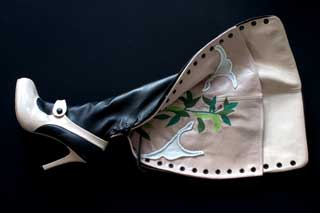
From the we make money not art blog here is an interesting article on temporary body imprints making into the fashion world by artist Emily Jane
Atkinson with her Tatoo-me boots

Print and fashion continue to walk hand in hand.

Art wall paper or A-WAL is "adorning the vernacular one email at a time". This web tool allows users to upload their own photos and images to be displayed as background wallpaper. The company is also featuring specially curated artworks to serve as image backgrounds for users. Adorning the artworld. Note - they do charge for this service - but an interesting idea as a means of creating virtual printed surface...

Saw this on an e-flux announcement this morning. The press release explained that for this installment, they are featuring independent writer, lecturer, and curator Dr Kathy Battista, who is based in London. Kathy’s abiding interest in and support for experimental art forms and innovative practice has been displayed through her past involvement and work with esteemed organizations such as Artangel, Tate Modern, and the Serpentine Gallery. Kathy has regularly contributed to Contemporary, Frieze, Third Text, and Art Monthly amongst other publications, is an editor of Art & Architecture Journal.

The artists featured in this exhibition include:
Daniel Jackson, Delaney Martin, Jamie Robinson, Sans Facon (Tristan Surtees & Charles Blanc), Dallas Seitz, Krisdy Schindler and Heather Sparks.


from Caitlin